Gàrraidhean a' Chaisteil
Not strictly a herb garden, this is a Gaelic-culture inspired garden steeped with herbal lore, biodiversity, local stories, and naturalistic planting and dramatic views.
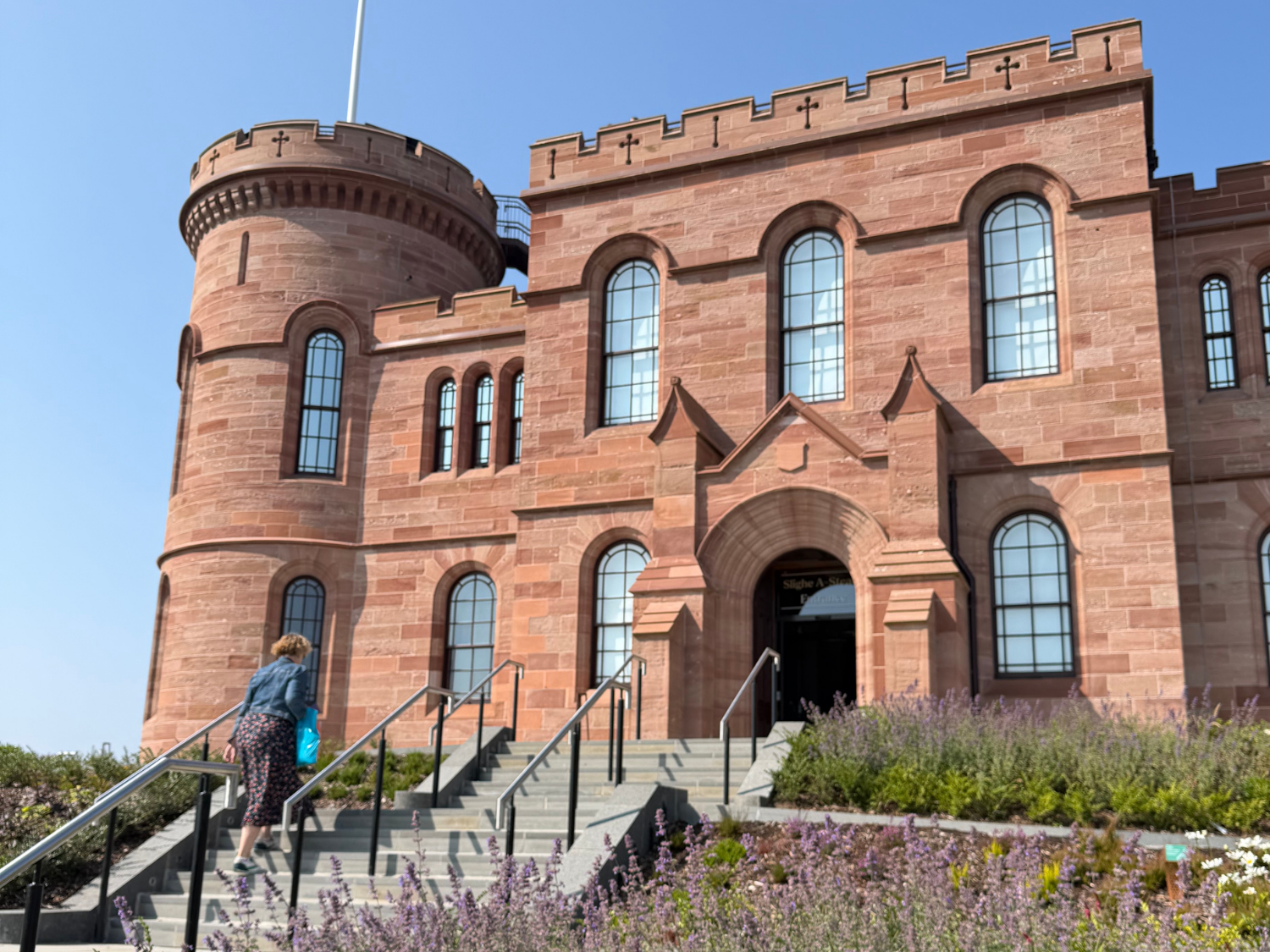
Inverness Castle as seen from the gardens
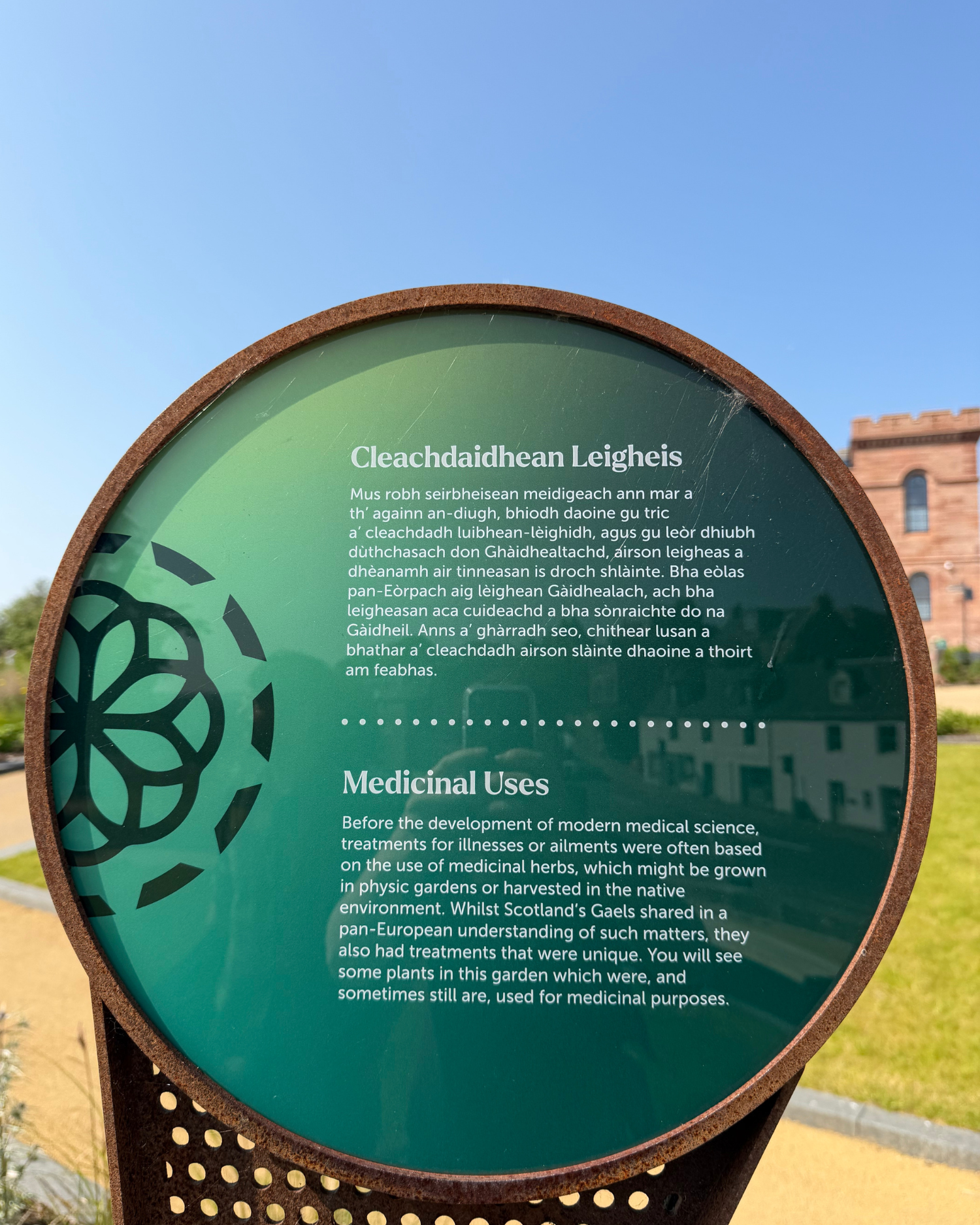
On a visit in high summer, I wandered around the Inverness Castle Experience gardens alongside visitors from across the world. Elevated within the town, the gardens are filled with medicinal flowers, plants for pollinators, as well as shrubs, grasses and very tasteful corten steel and carved stone interpretation with Gaelic-English translations.
Flora MacDonald, the Jacobite heroine, overlooks the garden and across the river Ness, to lush woodland and distant hills. Accompanied by her collie dog, the bronze statue of Flora is surrounded by oxeye daisies, tansy and yarrow, reminiscent of a Highland meadow.
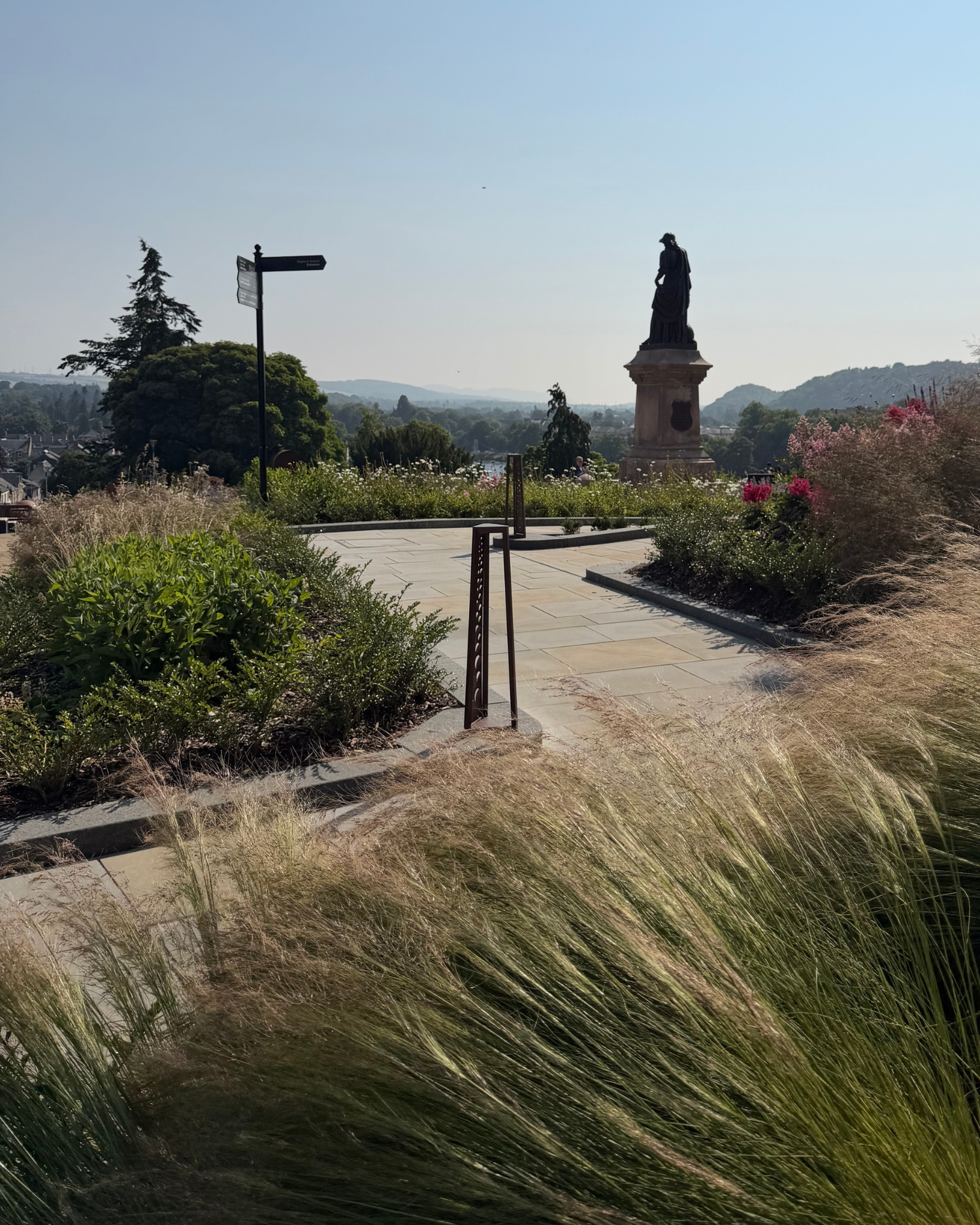
Flora MacDonald bronze statue is surrounded by naturalistic meadow planting with lots of plants from Scotland’s deep history.
What plants to expect?
Ox-eye daisies
Tansy
Sea hollies
Yarrow
St.John’s Wort
Meadowsweet
Echinacea
Box-leaved honeysuckle
Grasses
And an awful lot of astilbe, I’m assuming for the summer colour as it’s not one I know of for its Scottish plant lore.
There’s interpretation about plants that aren’t there in the garden, but have significant relevance to the Highland story, such as Scot’s pine.
I was amazed to see plants which like quite different conditions growing side-by-side, such as meadowsweet (damp-loving) and echinacea (prefers free-draining soil).
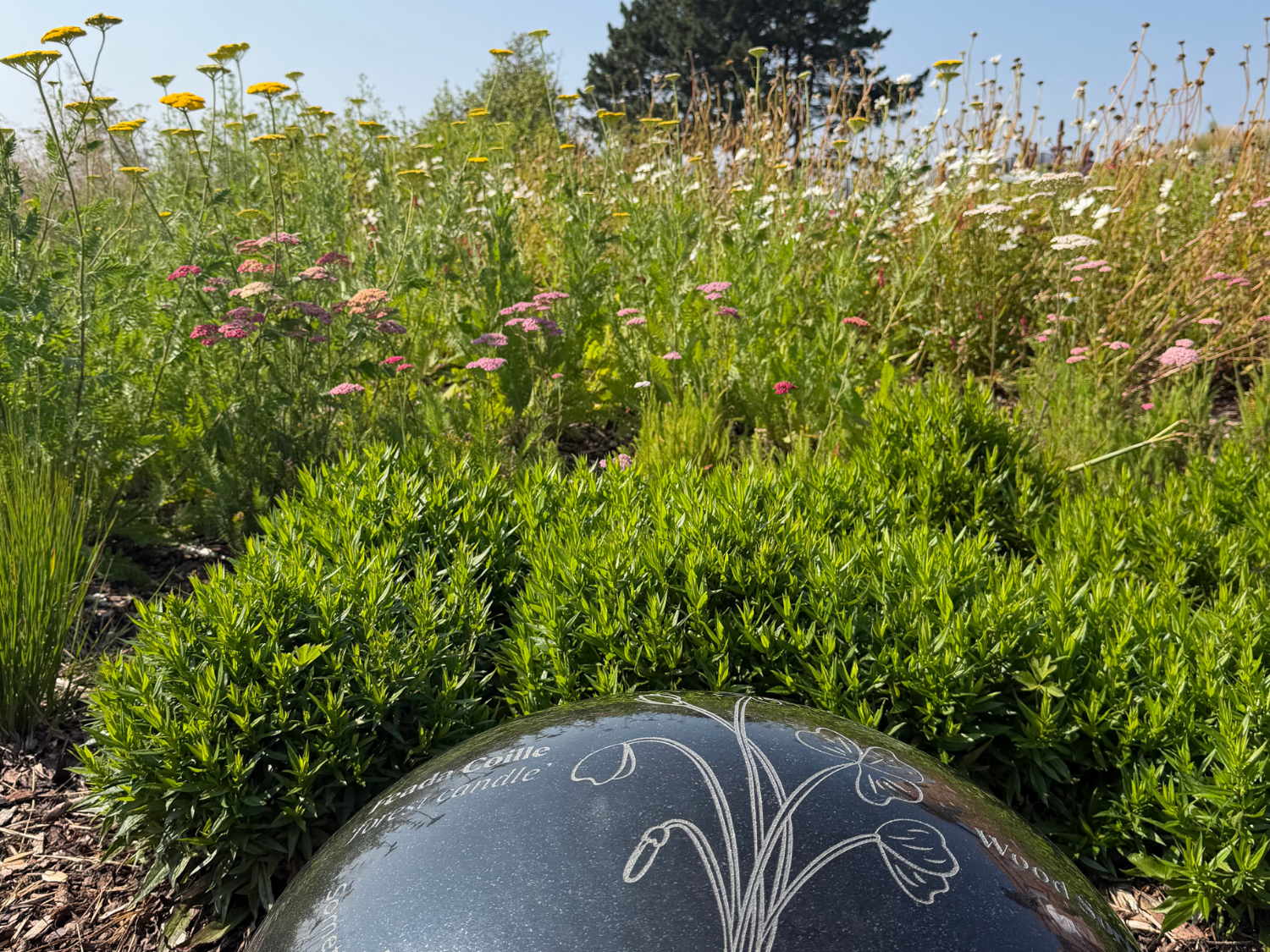
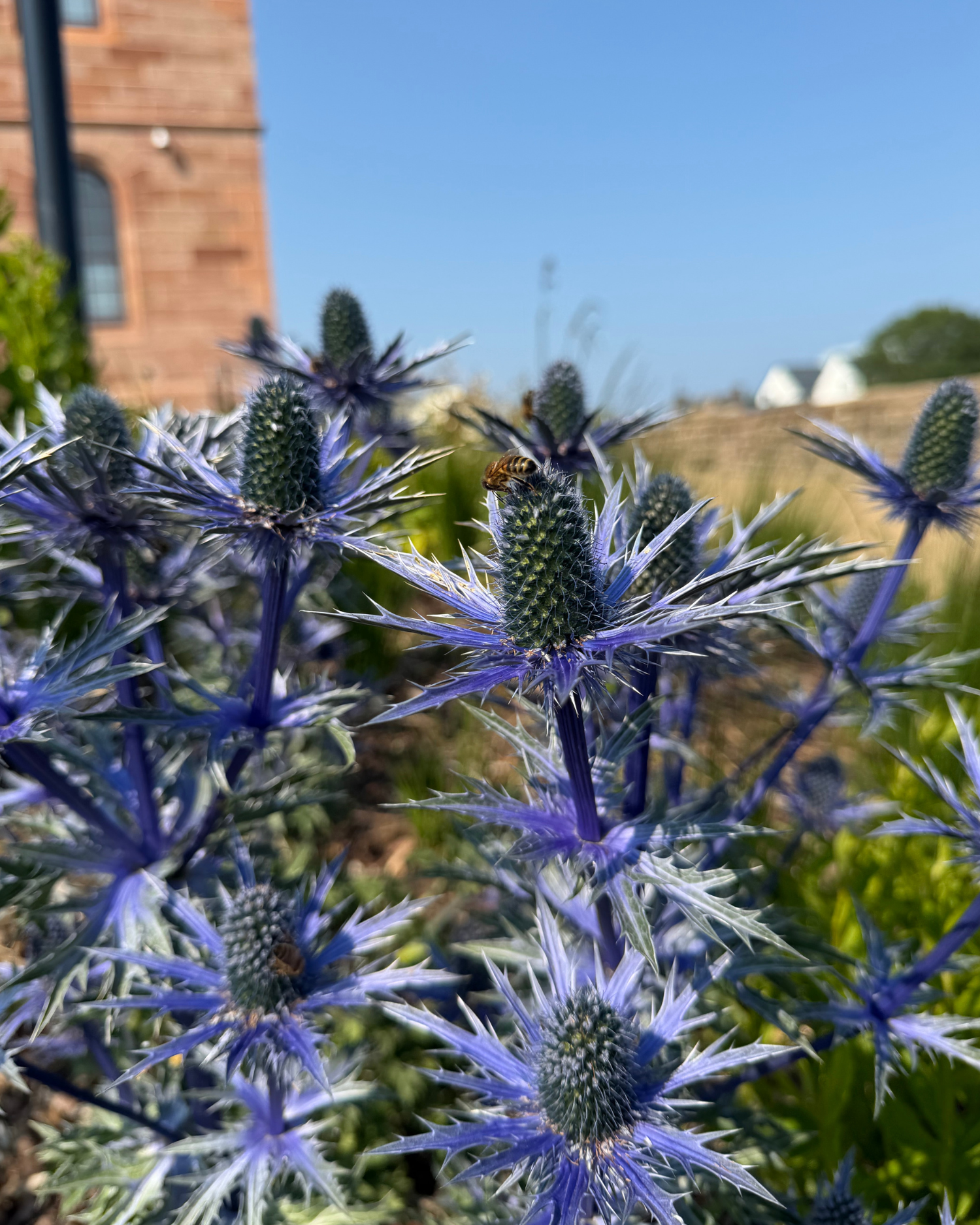
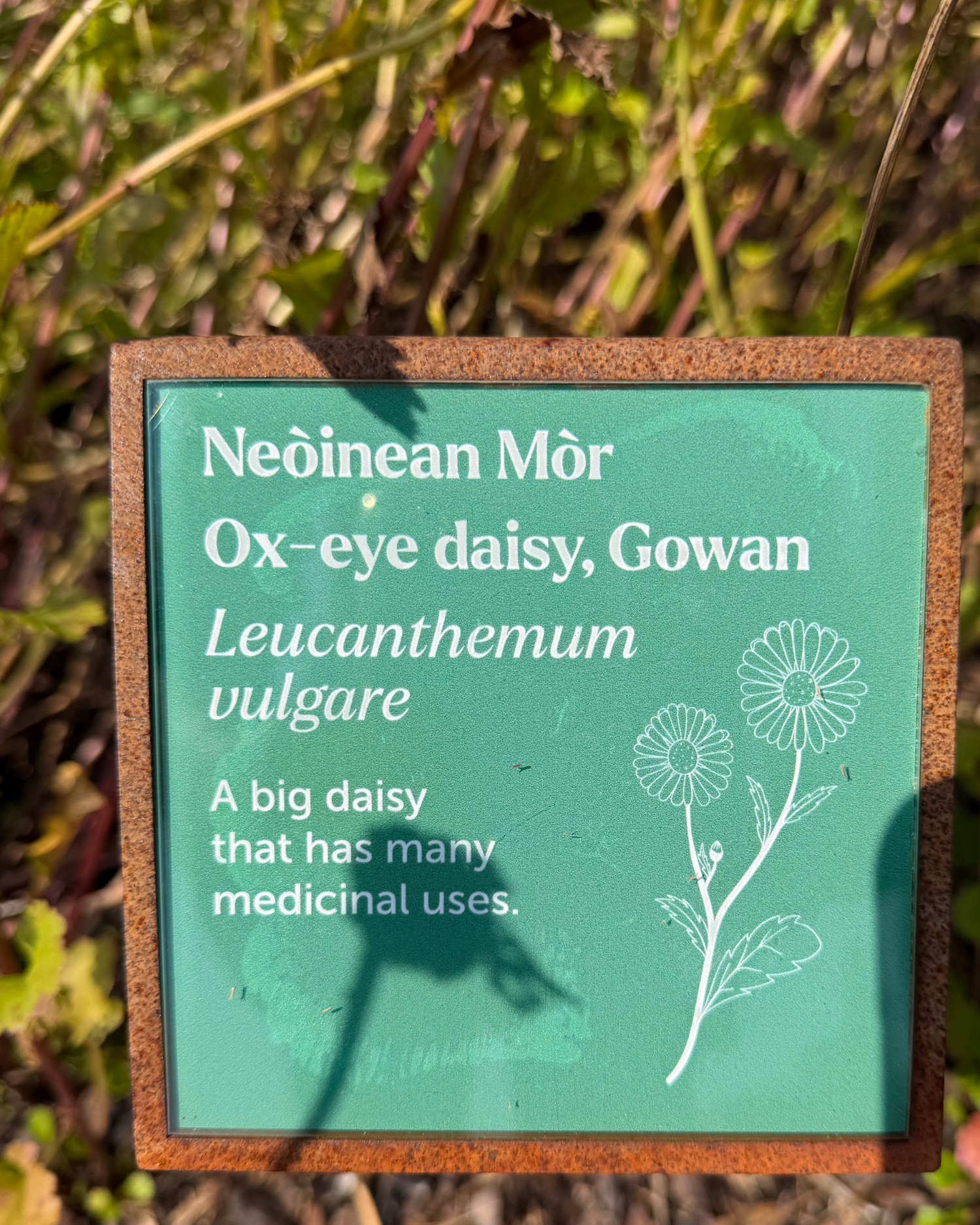
My top tip would be to bring your lunch and sit in the garden among the relaxing planting and gaze out over the valley as Flora MacDonald does.
Allow yourself plenty of time to not only admire the planting but to read the signage, which brings to life the connections between people, literature, medicine, folklore, biodiversity and plants.
Plant Highlight
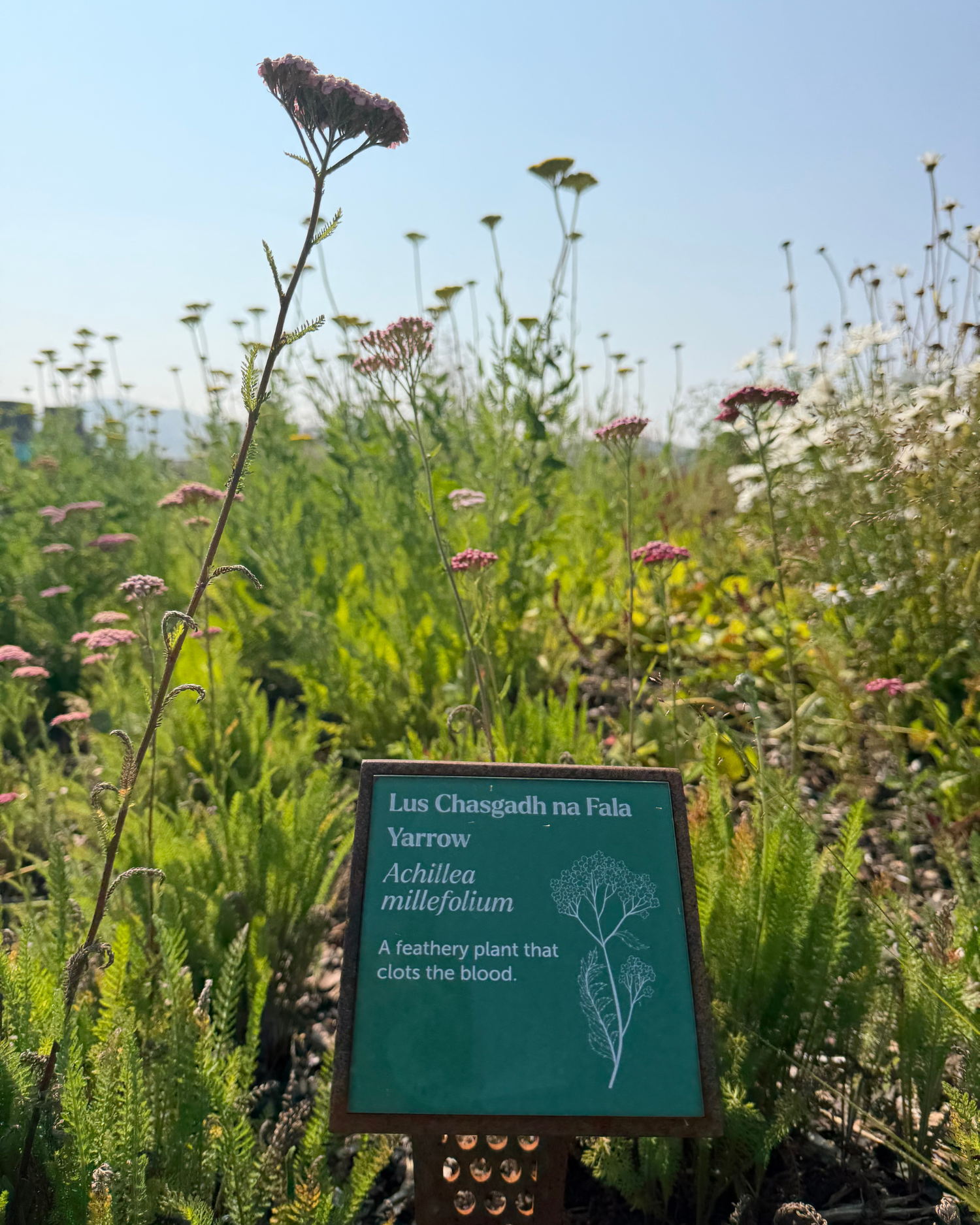
Yarrow: a feathery plant that clots the blood
Yarrow
Gaelic name: Lus Chasgadh na Fala / Fola (plant that staunches bleeding); Lus na Fola (blood plant)
Scots name: Doggie’s brose; Meal-and-folie (Shetland)
Botanical name: Achillea millefolium
The plant of a thousand leaves, is well known for its handy use to staunch bleeding and its antibacterial properties.
How to find the garden
Inverness Castle Experience
Inverness, between Castle Street and the River Ness.
About a 10-minute walk from the train station.
This is a central location and there’s no car parking at the Castle (although there is around the city). Best to reach it by train, bus then walking or cycling.